
When SEWP V Fits Product-Based IT Work
How to decide when products, implementation, maintenance, cloud, and security services belong in a SEWP V acquisition story.
Quick answer
SEWP V is strongest when the requirement centers on IT products, product-based services, and lifecycle support. Services-heavy or advisory-heavy scopes may need a different vehicle or a teaming strategy.
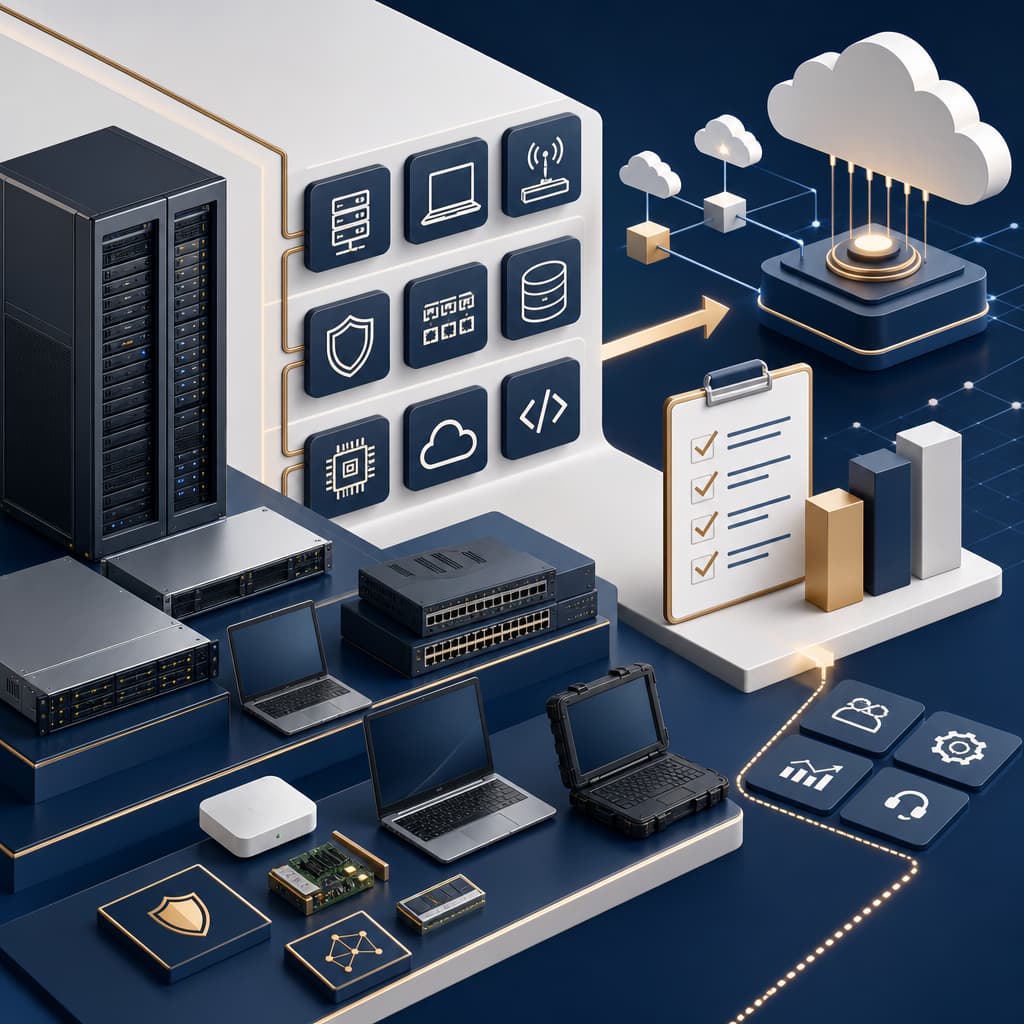
SEWP V is often discussed as a product vehicle, but the real value is more precise than that. NASA describes SEWP as a GWAC for commercial ITC/AV products and services, with a wide scope that includes desktops, servers, network equipment, storage, security tools, software products, cloud based services, telecommunications, health IT, video conferencing systems, and other ITC/AV products. NASA also states that SEWP offers product-based services such as installation, maintenance, training, and engineering services related to in-scope products.
That makes SEWP V highly relevant to modernization work where the product decision and the implementation plan are inseparable.
For OmniCore, this is a natural fit with Infrastructure and Networks, Cloud and Modernization, and Cybersecurity and Governance. Agencies rarely buy hardware, software, or cloud services in isolation. They buy a future operating state.
What SEWP V is designed to do
NASA's current SEWP contract information page lists SEWP V as a fixed-price IDIQ with an effective ordering period from May 1, 2015 through September 30, 2026. NASA also states that it has extended the SEWP V ordering period through September 30, 2026, with potential option periods from October 1, 2026 through January 31, 2027 and February 1, 2027 through April 30, 2027. Issuing agencies can continue to place delivery orders and BPAs using the SEWP V contracts.
NASA's general information page also notes that SEWP V contract groups have the same scope, and that the vehicle includes small-business categories such as SDVOSB, WOSB, EDWOSB, HUBZone, VOSB, and small business.
Those facts are useful, but they are not the whole decision. A SEWP V discussion should quickly move from "Can this be bought?" to "Can this be bought cleanly, with the right implementation responsibility?"
Good SEWP V candidates
SEWP V tends to make sense when the requirement has a clear product center of gravity and the related services are tied to those products.
Common examples include:
- Network equipment refreshes where configuration, deployment, warranty, and support need to be included.
- Cloud or software product buys where implementation and migration services are part of the same work package.
- Security tooling where licensing, integration, training, and operational handoff matter as much as the tool itself.
- Endpoint, server, storage, audiovisual, or telecommunications buys that need engineering and installation support.
- Product-based modernization efforts that require several manufacturers, resellers, integrators, or service partners to coordinate cleanly.
That is why OSG's partner network model matters. Product-based work often requires a team that can connect acquisition support, engineering judgment, and delivery accountability without turning every procurement into a new organizational puzzle.
Where SEWP V is not enough by itself
SEWP V is not a magic label for all IT services. If the primary need is a broad advisory engagement, staff augmentation, independent program management, or a long-running managed service that is not anchored to in-scope products, a different route may be cleaner.
The practical question is whether the services are product-based or whether the product is incidental to a larger services requirement.
For example:
- A firewall refresh with installation and transition support may be a strong SEWP conversation.
- An enterprise cybersecurity governance program with policy development, risk management, and security operations redesign may require a broader services vehicle or teaming path.
- A cloud product subscription with migration services may fit.
- A multi-year application modernization program with agile teams, accessibility, DevSecOps, and product management may need a separate services strategy.
That is why OSG's contracts page does not treat one vehicle as the answer to every requirement. SEWP V can be one path among several.
Build the requirement around outcomes
Product-centered buying still needs a strong scope of work. FAR market research principles still apply: the acquisition begins with a description of the government's needs sufficient to support market research. For SEWP-style work, that means the team should define:
- The product classes, performance needs, and compatibility constraints.
- Required installation, implementation, migration, training, maintenance, warranty, or engineering support.
- Security, configuration, data, accessibility, and interoperability requirements.
- The handoff model: who owns acceptance, operations transition, documentation, and sustainment.
- Whether the acquisition should be competed across one SEWP group or multiple groups to improve competition.
Those details help the buyer avoid two common failure modes: buying products without the services needed to make them useful, or bundling services so broadly that the acquisition path becomes hard to defend.
Where OSG fits
OmniCore's role is to make the acquisition conversation more usable. For a SEWP V candidate, that can mean helping a buyer or partner team clarify the technical scope, separate product-based services from broader professional services, identify where specialist partners belong, and package the requirement so delivery accountability is clear.
This is not just procurement hygiene. It affects whether the work can move quickly after award.
If a requirement involves infrastructure, cloud, security, data, or application modernization, OSG can help decide whether SEWP V belongs in the plan or whether another route should carry the work. Start with the desired operating state, then select the vehicle that can support it.
Official sources
- NASA SEWP V Contract, Clauses & SOW
- NASA SEWP V General Information
- NASA SEWP Ordering Information
- FAR 10.002 - Market Research Procedures
If your team is weighing SEWP V against GSA MAS, OASIS+, CIO-SP3, or a state vehicle, ask OmniCore to help map the acquisition path.
Common questions
- When is SEWP V the right path?
- SEWP V is a strong fit for IT products, hardware, software, infrastructure components, and product-based support services.
- What if the scope includes more services than products?
- A services-heavy scope should be reviewed against alternate vehicles or a mixed teaming path so the acquisition route matches the work.